Education – Tertiary (University & TAFE), Residential, erbas™ SUSTAIN
Charles Darwin University & Campus Living Villages
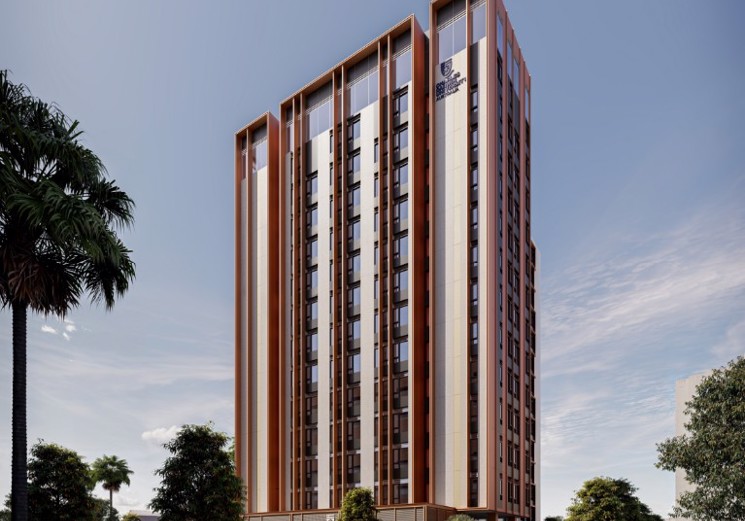
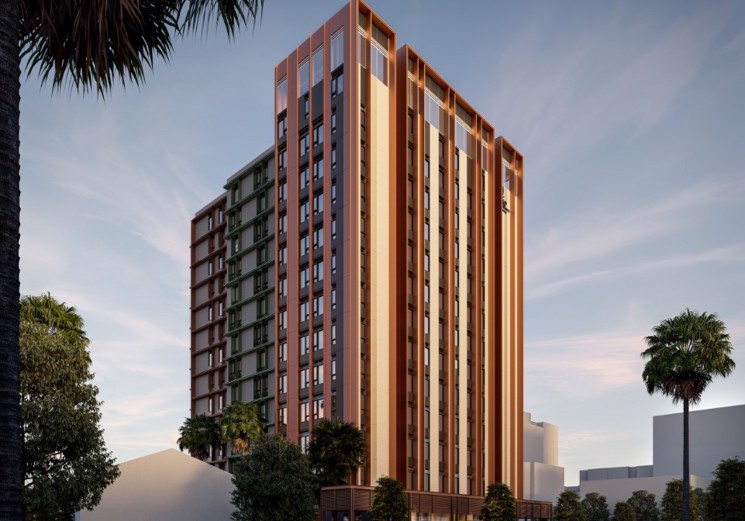
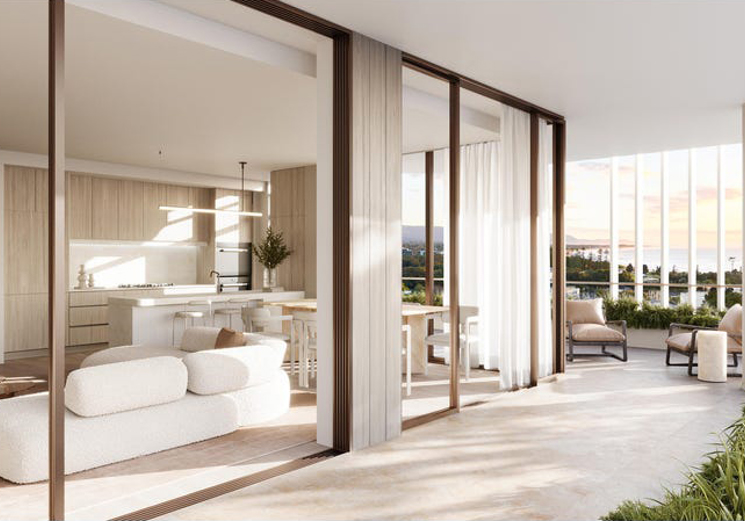
The Charles Darwin University and Campus Living Villages Purpose-Built Student Accommodation (PBSA) is a 14-storey facility designed to provide contemporary student living that supports wellbeing and community.
Location
NT
Client
Campus Living Villages
Architect
AJC Architects
Builder
DCOH
Structural/Civil
Colliers
Our Services
Mechanical Electrical Hydraulic Fire Lift Sustainability
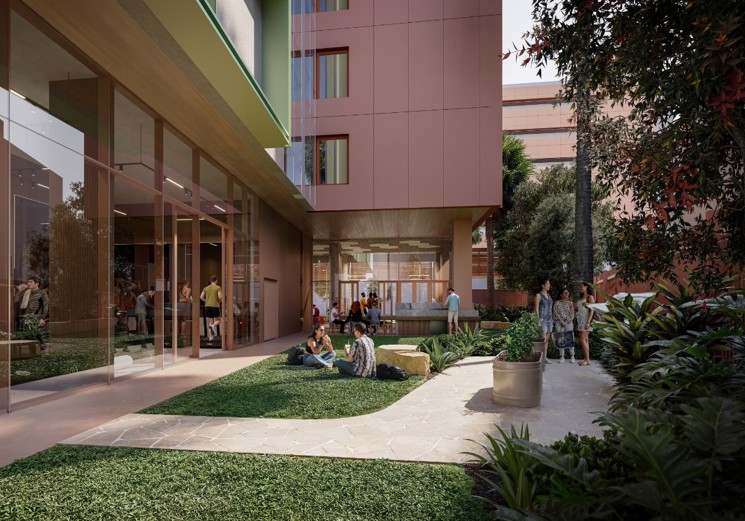
The project includes a mix of studio apartments, shared cluster accommodation and single dormitories, complemented by communal facilities on the ground floor.
The project is targeting both a 5 Star Green Star Buildings v1.0 rating and WELL Gold v2 certification, making it the first student accommodation development in Darwin to pursue both certifications and setting a new benchmark for sustainable, healthy student living in the Northern Territory.
Our Involvement
erbas™ | erbas™ SUSTAIN is providing integrated building services engineering and sustainability services, delivering mechanical, electrical, hydraulic, fire, vertical transport and sustainability expertise through a coordinated design approach.
Our sustainability team has undertaken Life Cycle Assessment (LCA), building physics analysis, façade optimisation and climate-responsive modelling to optimise environmental performance and respond to Darwin's tropical climate.
Sustainability Outcomes
A comprehensive Life Cycle Assessment (LCA) was undertaken in accordance with ISO 14044 and EN 15978 to evaluate the environmental impacts of the building across its full life cycle — from material production and construction through to operation, end-of-life and potential future material recovery (Modules A–D) over a 60-year study period. The assessment compared the proposed design against a Green Star reference building, identifying opportunities to optimise performance and reduce both embodied and whole-of-life carbon emissions.
Through sixteen design initiatives spanning mechanical systems, material specification and on-site renewable energy generation, the project is forecast to achieve:
- 95% reduction in whole-of-life carbon emissions
- 20% reduction in upfront embodied carbon, including impacts from material production, transport and construction
- Improved performance across eight environmental impact categories assessed under the Green Star Life Cycle Assessment methodology